Tuesday, October 12, 2010

Get Busy Living

I'm in a good mood today, and if you read yesterday's entry and found it depressing, then this is exactly what you need, for today I am reviewing the best film of all time and my personal favorite.

For starters, I will draw attention to the above claim that 'Shawshank Redemption', hereafter referred to as "shawshank," is the best film ever. And I mean better than 'Citizen Kane', 'Its a Wonderful Life', 'Godfather' and 'Dark Knight.' Those are all excellent films to be sure (except Citizen Kane, which is good, but not great, and I may explain why in the future, but not right now), but shawshank is superior for a number of reasons. For one, the technical aspects of the film, such as cinematography, music, acting, direction, writing and editing are all of the highest caliber. The music in particular is an example of perfect emotional balance in a film like this. Even when there is no music playing whatsoever, the silence of the moment is a perfect use of sound as well.

To illustrate, watch the scenes after it's discovered that Andy is innocent. Watch as Norton systematically murders Andy's witness, then keeps Andy in solitary for an additional month. There is no music, only the dialog. This accentuates Nortons words by not providing a distraction, allowing the audience to fully grasp the villainy of the moment. It would still have been a great scene if they'd played a slow dirge to punctuate the warden's taunts, but not as good as it is without a score.

Contrast this with Andy locking the door and playing a record over the loudspeaker, despite this meaning all the trust he's garnered with the prison staff is shot out the window. Nothing like opera to be the first music a bunch of inmates get to hear in years. Also, this defiant act is a nice little microcosm for the whole point of the film.

Also, lighting. The lighting in this film is not very subtle, but still integral in portraying the mood. For example, when Andy first arrives at the prison, the screen is heavily desaturated, coming off as gloomy. However, after Andy assists Hadley with the one-time gift bonus money thing in exchange for three beers apiece to his mates,  the scene changes to a warmer tone, to symbolize the triumph and moment of freedom.

One more point before moving on to why I love this film and why this film is so important to me, the cinematography. When Andy arrives at the prison, there is a shot as he walks inside that makes the prison tower look intimidating, as if it's consciously sucking away the souls of everyone there. To contrast, the final shot as Andy escapes through a sewer pipe shows the prison in the distance, small and insignificant, a castrated, de-toothed and de-clawed lion cub.

There are many themes in the film, but the main one is hope. There are three characters in the film that demonstrate the consequences of having hope, and of giving it up: Andy, Red and Brooks. Brooks has been at the prison for 60 years and it's the only life he's ever known. When he gets released, he can't cope and he commits suicide, deciding that this new world he's in is too much for him to bear. The film explains this as being "institutionalized" to the way of prison life. In other words, accepting that you're never getting out of Shawshank, so you might as well get used to it. This happens to Red, but it doesn't happen to Andy. Red gets released some time after Andy escapes and it seems he might follow in Brooks' footsteps, but through his relationship with Andy, who never gave up hope, he finds a reason to "get busy living."

Another theme is injustice of the worst kind, being convicted of a murder you didn't commit. Andy suffers this and gets life in Shawshank. However, the reality of the prison never gets to him. Right from the moment Red gets him a rock hammer, he starts his escape, hiding the hammer in a bible and digging a hole concealed by a poster of Raquel Welch....


Andy my man, you have good taste. Anyway, the point is that Andy never resigns himself to life as a convict and decides he wants out. Andy is a bastion of patience, ingenuity, planning ahead and never giving up. And in the end, his triumph over the injustice is gratifying.

What makes shawshank great is how relevant it is and how it can be applied to almost anything. The prison itself represents a hardship, while Andy represents a person enduring that hardship. But instead of succumbing and giving up, Andy fights through it and wins, even against the insurmountable odds facing him.

I suffer from Aspergers Syndrome, and that is my Shawshank prison. Very often I feel as though it get's harder and harder to fit in. I used to be bullied all the time, I've even considered suicide at a younger age. But I am Andy DuFrense, and Aspergers will not make me give up. I can beat it. If being an able member of society is a shitty pipe dream, then I will crawl through a shitty pipe. Why? Because I can. Because I will not resign myself to living with the fact that once upon a time, people refused to associate with me on account of my eccentricity (it's not so bad these days since Aspergers is becoming understood).

Andy is a symbol of the unbreakable human spirit and a reminder to press on even when the light at the end of the tunnel is not visible yet. The story of Andy DuFresne is one of triumph and one that really needs to be told more often. So, if you read this and have your own Shawshank prison (be it a disability, a financial struggle, anything that's holding you back and bringing you down), watch this film and be reminded that hope is a good thing. Make up your mind about whether or not you want to get busy living, or get busy dying.

EDIT:

Clearly, I have failed to convey the true awesomeness of shawshank and why it's the best film ever. As a film, it's on par with the other "best films of all time," but what sets it apart is the socially relevant, inspirational theme that has literally saved lives. If you have not seen shawshank, you are to go straight to blockbuster or netflix and watch it as soon as possible. Right now.

And if you have seen it, then you know what I mean.

Other reasons to see this film in case this humble recommendation wasn't enough:

* Morgan Freeman
* Stunning Architecture
* Prison Break
* Excellent Score (music)
* Morgan Freeman
* Morgan Freeman swearing
* A Library
* Morgan Freeman narration
* Narrator Morgan Freeman searing
* Morgan Freeman working in a library
* Morgan Freeman as a crook
* Great Jokes
* Morgan Freeman
* Morgan Freeman making great jokes

Ok, yeah, I like Morgan Freeman.

Sunday, October 10, 2010

Engage: An Analysis of why Creating a Strong Lead Character is Essential to the Survival of a Television Show

Disclaimer: This is the character review of the Star Trek captains I promised. If you have absolutely no interest in Trek, that's fine. I'm not really talking about the show, so much as I am about the lead characters of each installment in the franchise. But if you don't want to read, come back tomorrow.


"Gentlemen, I suggest you beam me aboard."

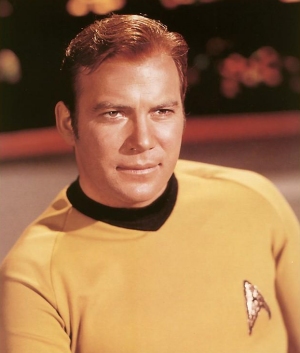
So, as with any discussion of lead characters in a franchise, let's start at the beginning with the original series, and good ole Cap'n James T. Kirk, the most notorious badass in starfleet history. There are many reasons why TOS Trek is loved (its optimism, its progressiveness, its excellent writing), but Kirk is one of the more prominent reasons. He's one of those "women want him, men want to be him" heroes. Every other episode, he gets to tap some delicious alien ass, while simultaneously saving his crew from ultimate doom. Kirk is almost a Mary Sue, in that he is portrayed as so badass that no matter what happens, he will always find a way, whether it be through brains or force, to fix it. He is your All-American quarterback hero.

Despite the rest of the show being as great as it was, without Kirk it would never have been as great. Gene Roddenberry, the creator of Trek, imagined a world where a Japanese man would be allowed to pilot spaceships. To put this into context, Trek was introduced directly after WWII, when the Japanese were not too popular with the United States, especially since Japanese pilots raped Pearl Harbor. While we think nothing of it today, a Japanese helmsman on a spaceship was extremely controversial for the time. As were: a Black receptionist, a Russian gunner, a Hillbilly doctor, and a drunken Scotsman mechanic. Throughout this list of characters that people would not have readily accepted, Kirk rounded them off with that American bravado and do-right personality. He represented America in every way that mattered, and he was the leader.

Roddenberry was very clever to build his cast this way, but as much as he needed to glorify Kirk, he also needed to make him a human being. In writing, this is called pathos, and Kirk had a number of flaws that made him acceptable, and in some cases even a better leader. For one, he was very hand-on and would insist on going on away missions personally with his two closest friends (Spock and Bones). This may not seem like a "flaw" at first glance, but by doing so he puts himself at risk when he should be making orders. Leaders are not supposed to be Heroes, a rule Kirk never learnt. Kirk also has a nasty habit of letting his impulses cloud his judgement, and this has led to problems, even people dying. However, this is still balanced with a high level of confidence, professionalism and consideration which has led to Kirk being the model on which every sci-fi captain from any subsequent series since TOS.


"THERE, ARE... FOUR, LIGHTS!" -- Jean-Luc Picard

Which leads to Jean-Luc Picard. Picard is a completely different character to Kirk. Where Kirk is the quarterback, Picard is the head of the speech-and-debate team. Oh, he's still equally badass, just in a completely different way. He's more refined and more able to act as a diplomat, rather than fixing everything personally. In fact, most of the Next Generation (TNG) Trek revolved around various problems being solved with words and insight. This happened on TOS too, but nowhere near as often.

Too illustrate Picard's badassery, an episode from season three featured a colony that a group of aliens called the Sheliak were heading to claim. The Sheliak have a treaty with the humans, which states that they must give notice whenever there are humans on a planet they plan to colonize within their space. So, they contact the Enterprise and send them to pick up the colonists. It turns out there are way too many, and they need more time than the three days they were given, but the Sheliak are being bureaucratic dicks about it. It should also be noted that the Sheliak could simply blow the Enterprise into space dust, but Picard continues to put his ship between them and the colony. In order to try and reason with Sheliak, Picard plays their game by their rules. He reads through their treaty (which is about as long as some of my posts), and finds something in the fine print. He then contacts the Sheliak, and informs them that as there is a "dispute" over the time needed to evac the colony, he reserves the right to have an arbiter decide on the right course of action. The Sheliak, being the bureaucrats that they are, agree to a stipulation in their own treaty. Picard then chooses a species currently hibernating to arbitrate, who won't be available for several months. Then as the Sheliak try to protest, he hangs up. The Sheliak hail, and he just strolls around the bridge with a smug look on his face.

In other words, he just beat the very powerful bureaucrats at their own game, and when they try to call back, he puts them on hold.... I don't care what you say, that is badass. This is how Picard solves problem, rarely with force, but by talking it out, and if he can't find a diplomatic solution, intimidation and blackmail are always options too. Picard represents the inverse of the ideal leader of the 80s, a time when all the action heroes were beefy muscle-heads with big guns and bigger penises, here's a mid-60s bald guy who talks things out instead of shooting, and still manages to be more badass that Steven Segal. America had gone through a few wars since WWII and the Cold War had only just recently ended. There was still a lot of diplomatic tension at the time and Picard was basically a symbol of what people needed to be. Cool, collected, calculating, not just running in guns blazing. He was exactly the kind of man people would put in charge of the responsibilities he had. In keeping with the theme of the right man for the right job:


"Mr. Worf. Fire." -- Benjamin Sisko

Meet Ben Sisko, the man who was hired to assist with the reconstruction of a culture after a decades-long occupation by a cruel dictatorship. Oh, and he becomes a spiritual leader, too. The story of Ben Sisko is the story of the everyday-man. Doing his job, trying to keep everything together, raising a son as an only-parent and a widower and being the Emissary (conduit to the gods) of an entire species. It's not a light load to place on one man. Well, unless that man is Ben Sisko of course.

Sisko takes the best of both his predecessors, then adds his own unique flare. Like Kirk, he tends to use his fists to make the point, but like Picard, he has a political position to uphold as well. Also, where both Kirk and Picard were the captains of the flagship of the fleet and perfect men for the job in their respective eras, Sisko is in charge of some backwater station in the middle of nowhere, guarding some backwards species nobody cares about. But under his leadership, it becomes the most strategically significant position in the entire galaxy... yet another responsibility for who later becomes known as "the Sisko."

Neither Kirk nor Picard had children. Picard even loathed them for most of TNG. For Sisko to have a family is a huge change of pace for Trek, and his relationship with his son is one of the best portrayed in a television show. While he has a job to do, and he's in charge of a station where his son can easily get into trouble, his style of "set an example" parenting makes Sisko his son's hero, let alone his father. Jake grows as a character himself throughout the series, and everything about his growth as a character stems from his admiration of his father. At times, even when Sisko is busy with a war or a civil dispute or a crime committed on the station or any number of headaches he'd have to deal with, he finds the time to go and play some baseball with Jake. This is an example for all fathers out there who don't spend enough time with their children. 

And is Sisko badass? Youbetcha! The man started a war, prevented a fascist coup within the Federation, held together an entire civilization and still found the time to be a dad. The best way to describe Sisko? SFdebris said it best: "Mr. Worf, prepare a photon torpedo, and write on it 'don't fuck with the Sisko.'"

But this of course, leads us too:


"There's coffee in that nebula" -- Kathryn Janeway

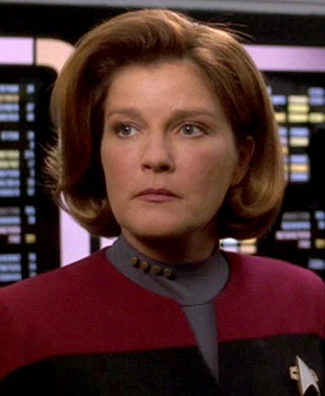
Captain Kathryn Janeway... and I'm afraid to say that this is where the awesome ends. Seriously, I have very little nice to say about Janeway, and that has very little to do with her as a character (there are some things about her, like her inflexibility, that annoy me, but there's plenty that doesn't), but the way she was written.

Let me just say right now, so as to avoid sounding like a chauvinist, I care less about the fact Janeway is a woman than her writers did. For some reason, they wrote her to be this authority figure that people would just blindly obey withouyt question. And in some sense, yes, that's the role of a captain, especially considering the context of the show she was in. But no, when half her decisions lead to people dying, losing considerable resources, or just plain NOT GETTING THE CREW HOME, I'd expect people not to take her so seriously.

Anyway, the context behind Voyager (VOY) is that the ship and it's crew have been flung into space and now have to embark on a 70 year journey to get home. They're cut off from any help, short on resources, possibly presumed dead, and just basically fucked. The captain that Janeway needed to be was the "mother of her crew" who would look after them and try to keep them together. But she wasn't. She was an idiot, and people followed her anyway because they were written too.

I am being a bit unfair. Come season five, she did improve and really start to take her role and responsibilities seriously. She recognized that it was partly her fault that they're stuck out here in the middle of nowhere, and at that point resolved to get her people home, no matter the cost. But then the show ended two seasons later, so all the good it did.

As a sidenote, Ron Moore, a prolific member of the writing team from TNG and DS9, would later go on to create the re-imagined Battlestar Galactica, a show with a remarkably similar premise to Voyager. And the character from that show was Bill Adama, a man who had this role down pat. He was the authority, but he was also a father to his crew and they looked up to him, not because he was the commander, but because he was doing everything he could to ensure their survival. This is the trait that Janeway lacked, and why I can't say I was a fan of the character, as much as the previous three.

But I still preferred Janway too...


"Was it something I said?" -- Johnathon Archer

... this complete twirp.

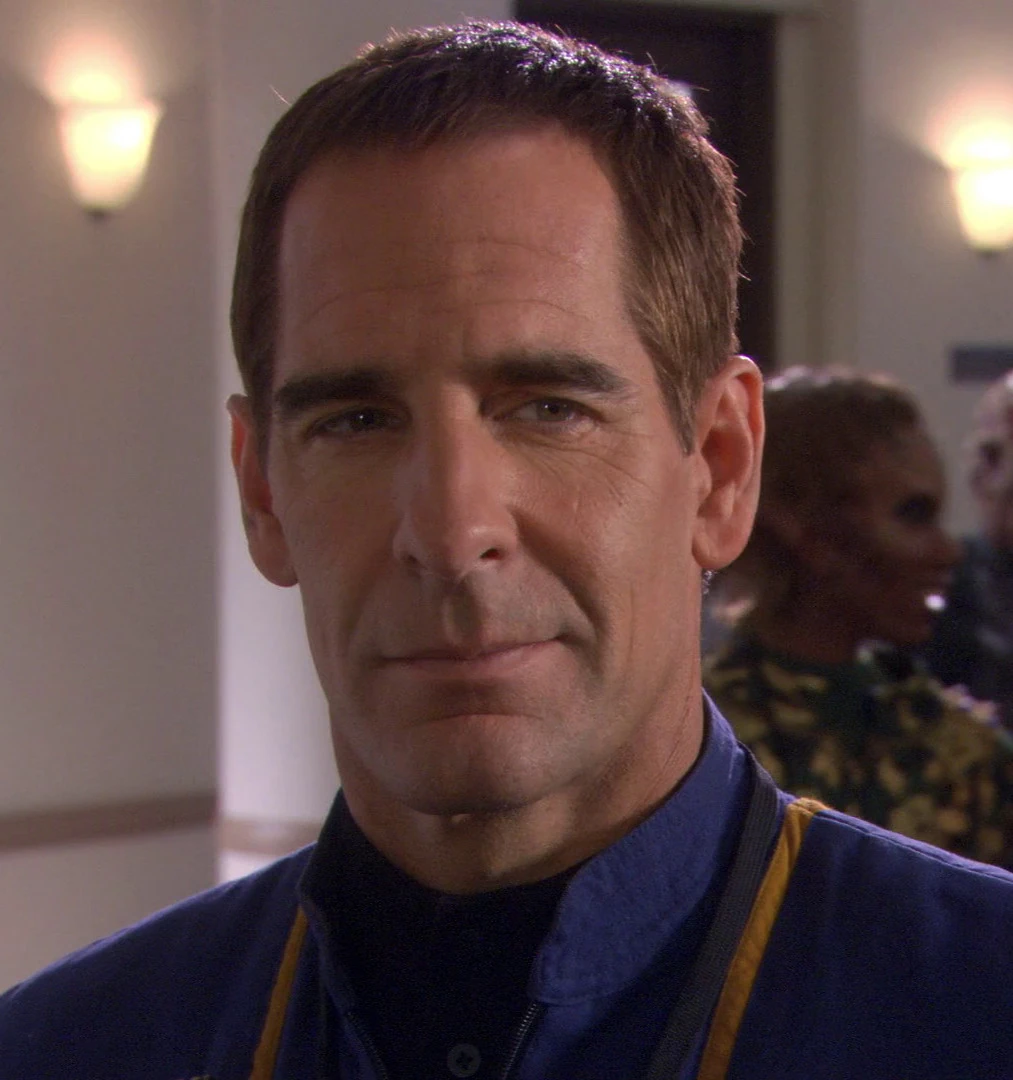
So, now we come to the franchise-killer, Star Trek: Enterprise (ENT), the show that supports genocide by not doing anything. ENT was a prequel series, supposedly taking place before TOS, when man was only just starting out exploring the galaxy. It was a really great concept, and presented opportunities to see how all the conventions of the earlier series came to be. Except, it didn't amount to anything, partly because of good ole Archer.

The role that Archer is supposed to be playing in ENT is the role of Christopher Columbus, James Cook, Louis and Clark, explorers traveling to places nobody has ever been before. To do that, he needs to be a good diplomat (which he isn't), have strong leadership skills (which he doesn't), the ability to make tough decisions (again, he doesn't), the foresight to think ahead and consider all the crap that might happen (nope, he lacks that) a childlike fascination with discovering new worlds (likewise, he lacks) and again, freaking awesome diplomacy skills (he taunts Vulcans, the fuckwit).

Archer's idiocy is responsible for just about every problem the crew comes along. And there's nothing else I can add. He's an idiot, and the show led to the death of a great franchise in large part because they completely ruined his character. I happen to think Scott Bakula could've really delivered if they'd written someone more well-suited to his situation. But no, we got Duchess.

And with that, I apologize to my fellow nerds for ending this character study on such a depressing note. But really, the only thing I can say is that three out of five Trek captains were great characters. It's a real shame that they weren't all great.

Saturday, October 9, 2010

As You Wish...

After yesterday's squickathon, I thought we could with something a bit more light-hearted and fun. So, buckle your seatbelts for a review of Princess Bride.

This is considered by some to be the most quotable film ever. To illustrate, here is a list of quotes from the film you may have heard:
* "As you wish." -- Westley, declaring his love for Buttercup
* "Hello. My name is Inigo Montoya. You killed my father. Prepare to die." -- Inigo Montoya's revenge boast
* "INCONCEIVABLE!" -- Vizzini, whenever something happens that he can't believe.
* "You keep using that word. I do not think it means what you think it means." -- Inigo on Vizzini's catchphrase
* "I am not left-handed." -- Inigo, during his fight with Westley
* "I suppose you think you're brave, don't you?" -- Vizzini, taunting Buttercup
* "Only compared to some." -- Buttercup's retort
* "We'll never survive." -- Buttercup on entering the Fire Swamp
* "Nonsense. You're only saying that because no one ever has." -- Westley's retort
* "There are a shortage of perfect breasts in the world. It would be a pity to damage yours." -- Westley on Buttercup's suicide attempt

And my personal favorite:

* "You only think I guessed wrong, that's what's so funny! I switched glasses when you're back was turned, HAHA you fool!! You've fallen victim to one of the classic blunders. The most famous is 'never get involved in a land-war in Asia,' but only slightly less well-known is THIS; NEVER GO UP AGAINST A SICILIAN, WHEN DEATH IS ON THE LINE!! AHAHAHAHAHA-HAHAHAHAHA-HAHAHA." -- Vizzini's last words

I could probably end this review here, since the above quotes are pretty indicative of the general tone and enjoyability of the film. But that would be a cop-out, so read on if you dare.

The film is an adaptation of a book, and in fact the context of the film is the book being read to a sick child by his grandfather. I'm personally not a fan of the context, but this format does lend itself well to feeling like a fantasy story, even though the story get's interrupted to have a little tiff between the grandfather and the kid. Plus, there are a few missing reels when the kid decides he doesn't want to hear the sappy bits.. whether or not that's a good thing is up to the viewer.

Anyway, the film's two major selling points: 1.) it has the best fencing sequence ever filmed. No, really, fencing. As in, Errol Flynn of the silent film era swashbuckling variety. And it's better than any action set-pieces in any of Michael Bay's films. 2.) Billy Crystal. I'll leave it at that.

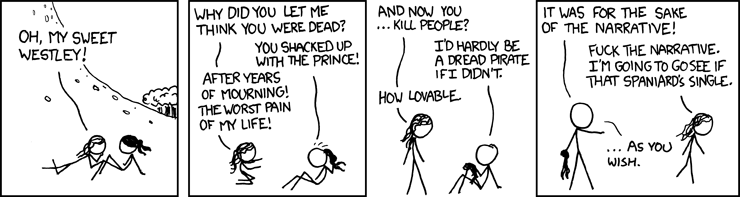
There are a few flaws, however, aside from the structure of the format. The film's plot is kind of all over the place. It start's with the love story and moves on quickly to the loverboy getting killed by pirates and girl getting all depressed. But wait: he wasn't killed by pirates and they're reunited! And then they're separated again... You have to watch it a few times to really understand what's going on.

Also, one of the major criticisms of the film is this:


That's a pretty legitimate criticism...

Still, the film is a lot of fun and for all it's initial viewing fail, it stand up well on repeat viewing. My father has a habit of watching something once, either liking or hating, and then either way not watching it again. This film is the only film he's seen more than four times, and he watches it over and over again. There isn't much in the way of symbolism or point to the film, it's just a damn fun film to watch, and then quote.

And that's really all I can say. What? Ginsengaddict wrote a short post?  INCONCEIVABLE!

Friday, October 8, 2010

Character study: Brianna the Thanophile

Perhaps the most obvious symbol of my depraved mind.

One of my pet projects is a fantasy mystery series, set in a Tolkien-esque world called Maranatha. As it's written, Maranatha is very much a parody of the real world and real life in general. For example, the local alchemist and apothecary has a lot of the same situations you'd expect of a pharmacy or a chemistry lab. Wizards are the equivalents of scholars and scientists, and Necromancers in particular are students of Thanotology and Necrology, perhaps working as morticians or coroners.

For those unfamiliar with fantasy-type settings, a Necromancer is a brand of wizard who works primarily with death and dead stuff, e.g: reanimated dead such as skeletons and zombies, spells which affect life force, etc. Generally, it's not a well-regarded occupation within the work it's portrayed, and Maranatha is no exception. I mean, who wants to hang around someone who thinks about death all day?...


... Never mind, moving on.

So, within the backstory of Maranatha, which centers around a nameless traveler (known as the Sojourner) travelling between towns and gathering a fellowship of people as he goes, one of the recurring characters is Brianna the Necrophile, Brianna the Thanophile, Brianna the Depraved and Brianna the [Insert unflattering title here]. The gist of her character, as the title should suggest by now, is that she is a necrophiliac.

If you have the stomach to continue reading after that last sentence, rest assured you will be rewarded with the image of a hot, mid-twenties-age nubile woman with D-cup breasts and excellent hips and long dark golden hair and bright green eyes..... being thrusted by a zombie.

Boring Character Stuff:

Important fact about Brianna as a character, she is ageless. Sort of undead, but also sort of alive. Thanks to a romantic partnership with a necromancer, her body's natural regenerative properties (the same properties that allow the human body to recover from any wound) have been drastically improved to the point where she is immortal. But if you think this a good thing, then you've obviously never had sex.

The backstory of the character starts when she was 16, the daughter of some noble rich person who doesn't really matter. She is bored, lonely, unhappy with her life even though it's luxurious, it's still boring and lonely (think Jasmine from 'Aladdin'). One day, while at the apothecary, she meets a tall, handsome type. Intrigued, she follows him home, which is pretty far outside of town, to a little cottage.

They meet, he's apprehensive that there's someone there, since he usually spends most of his time alone, but he's still polite and a gentleman and eventually offers her tea. And then he talks about his life's ambition. to become a Lich. In order to really explain the concept of a lich, I'd have to write whole separate entry, so I'll just let wikipedia do it for me:

http://en.wikipedia.org/wiki/Lich

Yes, this polite gentleman is a necromancer, and Brianna has the hots for him. And, he's fantastic in bed, as she quickly finds out after coming on to him. For months, she travels to his cottage almost every day to get a bit more lovin' from the guy. Eventually, he also develops a stronger attraction to her, in that as an outcast of society, he is lucky to have someone who actually wants to spend time with him. Brianna of course, finds him exciting.

Eventually, he does acheive his goal of becoming a lich, gives up necromancy and becomes a farmer, and Brianna runs off with him. They continue their escapades. He doesn't grow anymore at this point, being undead. She does, but at a much slower rate than normal. For years, they live happily.

Until some douche-bag Paladin comes along and "frees his soul" while they were climaxing. This resulted in Brianna gaining immortality and insatiable libido that no living man could quench.

So, she lives as a hermit, stealing bodies from graveyards and morgues to become zombie sex slaves (she did pick up a few tricks from her former lover), replaced when they decay so far that essential parts no longer remain attached. It's a grotesque existence, indeed.

Rooted to the character is a high sense of morality: she won't kill to satisfy her needs. To protect herself, or maybe even the town she's stealing bodies from, yes she'll not hesitate to get her hands bloody. Then she'll use the body for her own purposes, but never in cold blood. This seemingly out-of-place moral stems from the pain of losing her own lover, a fate she considers worse than death and would not wish on anybody.

Her relevance to the plot of Maranatha? Well, she's a recurring character. She'll occasionally cross paths with the Sojourner and his party as they travel and assist them with whatever they need assistance with. Or, the Sojourner's group will be enlisted by the townspeople to drive her out (actually, that's first arc I have her involved in). She's not really a villain, just.. well, sexually depraved. And she's not really a hero because she's... well, sexually depraved.

Still, this is one of my favorite characters and one of the most prolific recurring characters in the whole Maranatha mythology. If I ever get the backing and the budget to do Maranatha as a series, everyone who's read this post will probably be thinking "oh crap."

Thursday, October 7, 2010

Coming Attractions:

The following entries will be posted soon, in no particular order and according to no particular schedule.

  • A review of the classic song, 'All Along the Watchtower' by Bob Dylan
  • A review of my favourite film, 'The Shawshank Redemption'
  • A review of the greatest hack writer of all time, William Shakespeare
  • Another review of a classic song, 'Solsbury Hill' by Peter Gabriel
  • A review of my brother's favourite film, 'Fight Club'
  • A review of my father's favourite film, 'The Princess Bride'
  • An analysis of the virtual reality films timeline (Tron 1982, The Matrix 1998, Inception 2010)
  • A character study of the five Star Trek captains
  • A character study of Brianna the Necrophile, a character of my own creation
  • A character study of AI characterization in various media (GLaDOS of Portal, Skynet of Terminator, HAL9000 of 2001 a Space Odyssey, GERTY of Moon)
  • A study of the portrayal of Asperger Syndrome in film and television (Ben X, My Name is Khan, Boston Legal)
Stay Tuned...

The Cake is a Pie!

The Title is a LIE!

I was talking to my girlfriend the other day about the advent of modern media and how technology has reached a point where stories and narratives can be fully interactive. This has taken the form of are commonly known as "video games."

I attempted to make the point that games are the future of entertainment, just as oral traditions, books, theatre, television and cinema were before them. My point fell on deaf ears, and she told me she didn't care about games and thought they were a waste of time. This is a shame, especially considering how big a fan my girlfriend is of literature and music.

The wiki website http://www.tvtropes.org refers to this phenomenon as "New Media Are Evil."

A Brief History Lesson: In the 1930s, a new medium of entertainment was born in the form of Comic Books. The story of Superman, an alien with all of the classic superhuman abilities, was told through pages of pictures in sequence. This is arguably the form that television would later take. It was new, it was edgy, it was cool.

For the first few years, comic books were an underground sensation. Weekly episodes (another convention television would imitate) unfolded new chapters in gripping tales. Dynamic characters with amazing abilities, coupled with levels of humanity that struck a chord with a captivated audience.

So, when this awesome medium for storytelling came to the forefront of public consciousness, what happened? All of the older generation freaked out and banned them. Or, at least heavily regulated. It was thought that the audience comic books were targeted at (7-16 year-olds) were too immature to understand a lot of the subject matter (I could go on a rant about the vicious cycle here, but this history lesson has already gone on long enough).

I am personally not a fan of comic books, but far be it from me to doubt the literary value of 'Watchmen' or 'The Killing Joke' (the latter is the comic book upon which the film 'The Dark Knight' is inspired). There is a story there. There is something valuable.

It's come to my attention that the Supreme Court of the United States is hearing a petition that is trying to get video games classed as a regulated material. This would mean that minors would be unable to purchase games with a "mature" rating (i.e: most of them). If this happens, a sizable portion of the game publishers market will be lost. Developers may stop making games which are daring enough to aim for that rating, and instead do what most film-makers do (aim for a PG13 rating) in order to keep the audience. Although it isn't directly so, this is censorship; despicable, unforgivable and downright dirty censorship.

You'd think society would learn. This has happened so many times in the past:

1. Martin Luther posting his list of grievances on the church doors.
2. Elvis Presley and his dance moves.
3. Frikkin' Bowdler!

And here I was thinking Jack Thompson getting disbarred would be the final nail in the coffin. We've proven that the proponents of game regulation are far more insane than anyone supposedly influenced to violence by gaming. Got some news for you Jack: Correlation does NOT equal Causation.

Just because the 14-year old bully target owned a copy of GTA4, it does not mean it influenced him to pull a knife on his oppressors. There are plenty of other bully targets who do the same and do not play the game, and also plenty of people who do play it and are no more aggressive or psychotic than anyone else. STOP MAKING SHIT UP!

That's my rant for today. Now onto a game review to illustrate the point I wanted to make in the first place.


All you fellow nerds are gushing, no doubt. Yes, this is Portal, a game about physics, intra-dimensional travel, dark humour and psychosis. It's a total of 3 hours long (though some people have completed it in 15-20 minutes - less than a minutes per stage in some cases) and considered by some to be the best game ever.

I will always be a proponent of Command & Conquer being the best game ever. But I do love Portal.

What makes Portal great is the characters. All two of them: GLaDOS, the AI in charge of testing, and Chell, the Player Avatar that does not say a word throughout the game (save for the occasional grunt of pain when a cube drops on her head). The player is implied to be literally in the shoes of the character, playing the role of a labrat. GLaDOS starts out as a seemingly well-meaning mentor, and slowly the sinister nature of her character becomes clear. But still, it comes as quite a shock when she tries to incinerate you. And in perfect symmetry, the player defeats GLaDOS by doing the same to her.

The plot and narrative are simple and straightforward: you're a test subject going through multiple levels of testing, being guided along by a chirpy-voiced AI who eventually tries to kill you. What's subtle and interesting about it is that the whole premise (being a labrat in a scientific experiment) should actually be having an adverse effect on Chell's mental health. Thus, we have the promise of cake at the end of testing. And grief counselling. They're lies, but GLaDOS is still aware of Chell's deteriorating emotional state. It's fun when it's a game, because you can turn it off. But if the player actually were in Chells position (being flung into space, losing teeth to the emancipation grill, having to euthanize the companion cube, having to avoid falling into acid and being shot with real bullets), it wouldn't be a cakewalk.

The game is compelling. I only wish they remake it when VR becomes mainstream.

In the meantime, support free speech! Write to your local senators and congressmen and tell them you do not want games to be censored. This medium must survive!

Wednesday, October 6, 2010

Film Analysis: 2001 A Space Odyssey

I should probably point out that I am a total nerd and fan of science-fiction. So with that out of the way, let's move on to the review.

2001 is considered by many to be the greatest work of sci-fi of all time. Directed by the late Stanley Kubrick and released in the 1950s, the film completely changed the genre from campy low-budget genre-pieces to serious explorations of science, environments and the human condition. I masterpiece with clear influences in every sub-genre to date and one of the most iconic characters ever created.

So why so I not recommend this film for viewing?

Because, it'll put you to sleep faster than Valium and Bundaberg. For all the film's technical brilliance, Kubrick failed miserably with pacing. Or, he deliberately set the pace as it is and alienated 90% of his audience. I'm not doubting the film is cerebral and insightful, I'm just saying that if i had a choice between this and 'Inception', another film that is cerebral and insightful, I'd pick the one that keeps me at the edge of my seat, rather than the edge of consciousness.

Despite the lack of adequate pacing, 2001 truly is a masterpiece of film-making. I say this, because I have watched it several times and I've picked up on the subtle story that Kubrick tries to tell, hidden in the symbols, which subliminally strewn throughout the scenes.

Chapter One: The Dawn of Man

The original cinema release actually didn't have the first 45 seconds of the film released for home viewing. The first part of the film is actually 45 seconds of a black screen with a choir singing eerie fluctuating notes. This seems so random and out-of-place, but it becomes clear what's going on fairly quickly.

Thus Spake Zarathustra plays over the image of the solar system. Cut to our little blue planet.

After the music dies down, there are 12 shots of desolate landscape. Again, almost innocuous until one of the shots slowly rises. This also comes up again later, but in a different form.

Once the theme of desolation and nothingness is established by the landscape shots, we're shown a tribe of primitive primates who will eventually become mankind. This is where the film establishes another important theme: infancy. These primates are like children. One can infer they're in Brazil, due to the presence of tapirs. What's interesting about the tapirs is that they show no fear whatsoever toward the primates. This means they're equal species, the apes do not have dominance over them, and even have to fight with them over scare vegetation food. Food actually becomes a pretty major symbol. They're also at odds with their environment. Predators, rival tribes, etc. They are literally at the bottom of the food chain.

They go restlessly to sleep one night and awake the nest morning to find a black rectangle in the center of their den. This is the Monolith, and this is the second time the eerie choral music shows up.

This is the first hint that the black screen from the beginning of the film might be something more than a black screen. The blank screen shows up a total of three times in the film, each time accompanied by the music. This same music also shows up at each occasion that the Monolith pops up. If you look at the Monolith, you'll notice that it's dimensions are equal to the aspect ratio of a widescreen cinema screen, only vertical. Interesting. Does this mean that it's the Monolith itself singing that eerie music, and that the blank screen is actually the Monolith singing directly to the audience?

So, the Monolith sings to the apes and at first, they're freaked out by this foreign object. The music gets louder and suddenly, they're no longer afraid. They've developed a reasoning mind and it's implied the Monolith has granted them sentience.

Following this, the apes discover the ability to use tools. Through the use of tools, they begin hunting and killing tapirs, which leads to tapirs keeping a safe distance while the apes eat plentiful amounts of meat. No longer hungry and with clubs on their side, they take back territory from the rival tribe and establish themselves as the dominant species of the planet.

Chapter 2: The Jupiter Mission

Now we continue IN SPACE with some slow tracking shots of fantastically realistic looking space structures. We're introduced to Haywood Floyd. I really don't want to dwell too much on these scenes, other than that the same tracking shot from the opening of the film is used, thus bringing up the theme of desolation and emptiness. Only this time, instead of a desolate landscape which is most certainly a sprawling cityscape by this time, we're in the vast emptiness of space.

Floyd goes to a space station and chats with some scientists about an epidemic on the moonbase Clavius. He's not very forthcoming about information, so there's a cover-up going on. On his trip to the moon, Floyd is shown eating and sleeping (two very odd behaviours for a man in space, don't you think?), while the waitresses are shown trying to maintain balance while walking in a zero-G environment. Again, the theme of infancy. The food Floyd eats is reprocessed mush, very much like the food we'd feed to our children. The waitress walking in zero-G resembles a toddler just learning to walk. In space, man is like a child. It's a completely foreign environment.

Upon arriving at Clavius, Floyd addresses a room full of scientists and doctors about the discovery of a second Monolith at a dig site on Clavius. They've found that it's sending and receiving signals from Jupiter, and want to send a mission out to find its source.

Cut to Discovery in progress. To save resources, five of the seven astronauts are in stasis. The other two are Frank Poole and Dave Bowman. They also have an onboard AI who handles most of the ships functions, the infamous HAL9000. It is important to understand that HAL is constantly receiving the signals from Jupiter, which turn out to be the second Monolith. Since it's already been established that contact with the Monolith results in gaining sentience, this is crucial to the development of HAL's character.

HAL is also established to be infallible, and if he were to make a mistake, there would likely be something wrong with him. Poole and HAL have a chess game, and this something I would not have noticed if I hadn't read it elsewhere, but HAL actually cheats. Poole is mouthing his possible moves. We don't know it yet, but HAL can read lips, and Poole is basically telling HAL his strategy. So, what does the 100% logical, unfeeling computer AI do? HAL tells Poole a series of moves that ends in Poole being checkmated. Poole resigns.

What's interesting about this scene is that HAL lied. The series of moves actually does not result in Poole being checkmated, which means one of two things. 1: HAL made an error. 2: HAL made a strategic gambit to force Poole to concede, so he'd win the game. Either way, HAL is showing signs of being more than just a machine.

So, as they get closer to Jupiter, HAL reports that there is something wrong with a vital piece of equipment. However, Bowman checks it out and finds nothing wrong. Immediately suspicious, Bowman takes Poole into a place where HAL can't hear them and they discuss shutting HAL down. Of course, HAL can read lips and catches on to their plan.

After this, HAL kills Poole by flinging him off into space. Then he kills the five astronauts in stasis. Then he refuses to let Bowman back on board Discovery. In other words, HAL defended himself.. a rather human thing to do. So, Bowman does manage to get back aboard Discovery, then he shuts down HAL, who expresses fear and pain, and even begs for his life.

It's subtle, but it's implied that contact with the Monolith has granted HAL sentience. Immediately, his first reaction was to try to establish dominance over his environment. But Bowman, a member of a species that evolved a long time ago, is able to stop HAL from beating him. Stuck around Jupiter with no way of getting home, Bowman goes outside.

Chapter 3: Beyond the Infinite

The Monloith revolves around Jupiter, and then horizontally (for the first time in the film) fills up the screen and we get a literal interpretation of Bowman's evolution. The Monolith singing is louder than it has been before and the stargate opens to take Bowman to a new level of evolution. After the stargate sequence, Bowman is shown in a room with furnishings. He dines a gourmet meal, a step up from the reprocessed mush from before. And then he grows old and dies.

Enter the starchild looming over Earth, completely free of the constraints that prevented mankind from feeling at home in space. This is the next stage of human evolution.

Thus Spake Zarathustra, Cue Credits.

And if you didn't fall asleep during the film, you deserve a medal.

--- Ginsengaddict

First Post

Hi,

Obviously, I'm pretty new at this, so expect me to fumble around a bit. I'm starting this blog as an experiment in improving my skills as a communicator. For that purpose, I'll start by sharing a little about myself:

1. I am a student taking a Bachelor of Communications at UWS Penrith. (Holla' Werro!)
2. I am smart.
3. I am very smart.
4. I suffers from Aspergers Syndrome (and yes, I have a formal diagnosis)
5. I love film.
6. I am outspoken about my opinions and will share them even when they're not wanted, so expect controversy on this blog.
7. I am Agnostic, and have a pro-theist worldview.
8. I have a tendency to Troll-Bait

With all that in mind, I will be updating this thing on varying occasion. Expect this to be a blog about Art, Insight, Social Commentary and lack of Sarcasm... ok, maybe a little Sarcasm.

--- Ginsengaddict